Businesses that handle large freight volumes need the right facility to store, manage, and move their inventory. The main difference in freight warehouse vs distribution center operations is their primary purpose: a freight warehouse focuses on holding goods until they are needed, while a distribution center prioritizes processing orders and moving products to their next destination. Both facilities can provide storage and freight handling, but their workflows, inventory requirements, and transportation functions differ. For manufacturers, wholesalers, and distributors, choosing the right model can improve inventory control, reduce unnecessary handling, and support more efficient transportation. MB Rail helps businesses connect freight storage with rail and transportation services to support their supply chain requirements.
What Is a Freight Warehouse?
A freight warehouse is a facility designed to receive, store, protect, and manage goods before they move to another location or enter production. Its main function is inventory storage rather than immediate order fulfillment.
Manufacturers, importers, wholesalers, and commodity businesses use warehouses to hold raw materials, finished products, equipment, and bulk freight. Inventory may remain in storage for several days, weeks, or months, depending on demand, production schedules, and shipping arrangements.
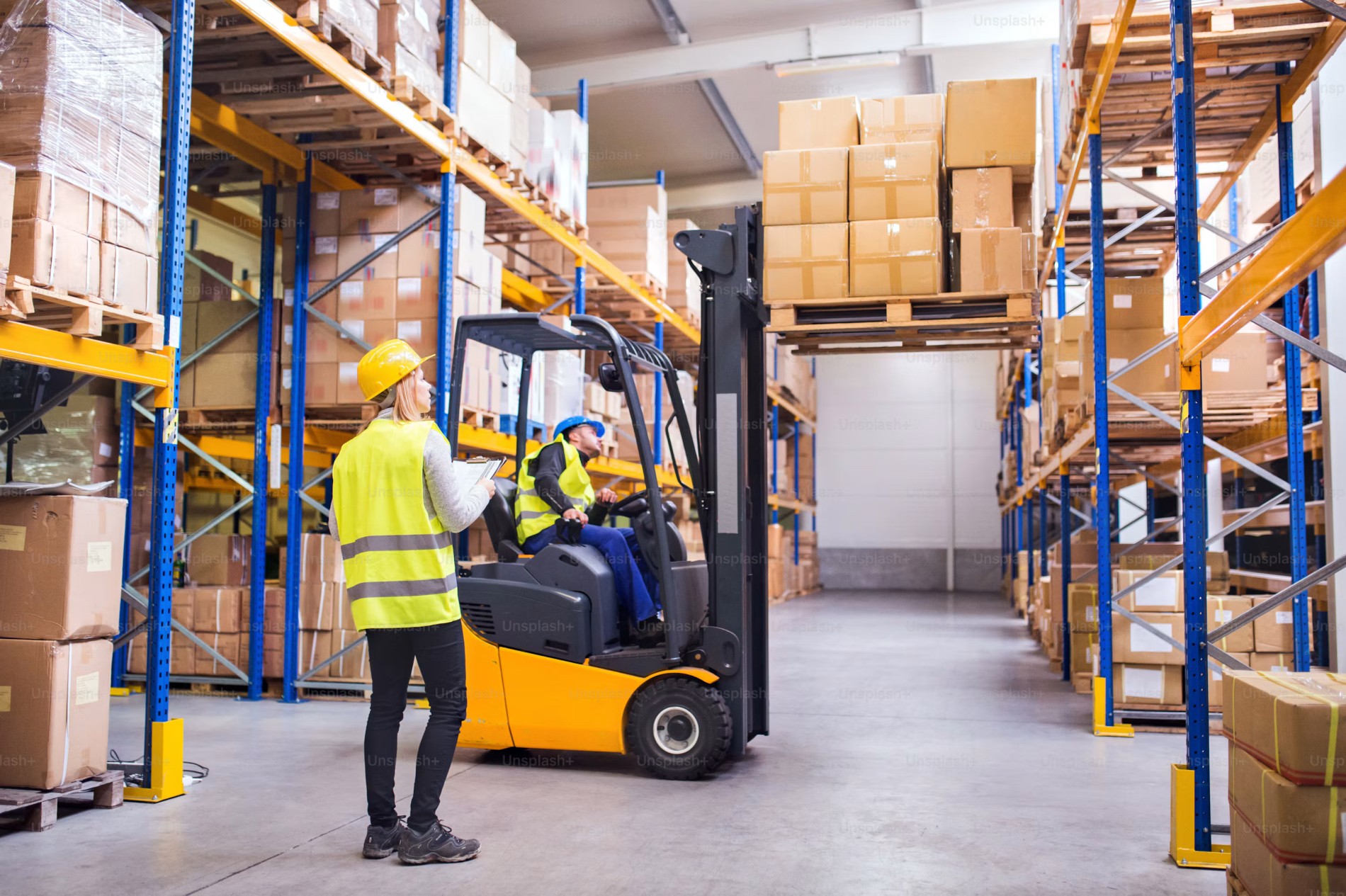
A freight warehouse can also support several handling activities, including:
- Receiving and unloading: Accepting incoming freight from trucks, railcars, or containers.
- Inventory storage: Organizing products in designated areas for easy identification and retrieval.
- Palletizing and repacking: Preparing goods for safer storage or onward transportation.
- Freight consolidation: Combining shipments from different sources into larger outbound loads.
- Cross-docking: Moving selected freight directly from inbound to outbound transportation with limited storage time.
- Inventory management: Recording incoming, stored, and released goods to maintain accurate stock information.
A warehouse for manufacturers can be particularly useful when production volumes exceed immediate shipping requirements. It provides a location to hold raw materials before manufacturing or finished products before customer orders are ready.
What Is a Distribution Center?
A distribution center is a logistics facility designed to receive, process, organize, and dispatch products to customers, retailers, wholesalers, or other facilities. Its main objective is to keep inventory moving through the supply chain efficiently.
Unlike a traditional storage-focused warehouse, a distribution center generally handles more frequent inbound and outbound activity. Products arrive from manufacturers or suppliers, undergo sorting and order preparation, and leave according to delivery schedules.
Common distribution center activities include:
- Receiving and checking incoming shipments.
- Sorting products by destination or customer order.
- Picking and preparing goods for outbound shipments.
- Packing, labeling, and repackaging products.
- Consolidating smaller shipments into larger loads.
- Coordinating transportation and delivery schedules.
- Processing inventory transfers and replenishment orders.
For example, a manufacturer supplying several wholesale customers may send bulk products to a distribution center. The facility divides the inventory into customer-specific shipments and coordinates their onward transportation.
Distribution centers are particularly useful for businesses that need regular product movement, organized order processing, and reliable deliveries across multiple locations.
Freight Warehouse vs. Distribution Center: Key Differences

The main distinction between these facilities lies in their operational priorities. A freight warehouse concentrates on inventory availability and storage, while a distribution center focuses on order processing and outbound movement.
The following warehouse services comparison highlights their differences.
| Comparison Factor | Freight Warehouse | Distribution Center |
|---|---|---|
| Primary purpose | Long-term or temporary freight storage | Product processing and distribution |
| Main priority | Inventory protection and availability | Order fulfillment and product movement |
| Storage duration | Often days, weeks, or months | Generally shorter, depending on shipment flow |
| Inbound operations | Receiving, unloading, inspection, and putaway | Receiving, checking, sorting, and processing |
| Outbound operations | Releasing inventory when requested | Preparing and dispatching customer orders |
| Inventory movement | Usually based on storage and release requirements | Usually based on order and delivery schedules |
| Common activities | Storage, palletizing, consolidation, and repacking | Picking, packing, sorting, labeling, and shipping |
| Main users | Manufacturers, importers, and commodity businesses | Retailers, wholesalers, manufacturers, and distributors |
| Performance focus | Storage capacity and inventory accuracy | Throughput, order accuracy, and dispatch performance |
These differences are general operating patterns, not strict rules. Many modern facilities combine storage and distribution functions. The actual services depend on the provider’s equipment, workforce, facility layout, and customer requirements.
Warehouse vs. Distribution Center: How Freight Moves Through Each Facility
Understanding the movement of goods provides a clearer picture of storage and distribution logistics. Although both facilities receive and release freight, their daily workflows are organized around different objectives.
1. Freight Movement in a Warehouse
A warehouse generally follows a storage-oriented process. Products arrive, are checked, placed in designated storage areas, and released according to business requirements.
A typical warehouse workflow includes:
- Freight arrival: Goods arrive by truck, rail, or container.
- Receiving and inspection: Staff check shipment quantities, packaging, and visible cargo condition.
- Storage allocation: Products are assigned to suitable storage locations based on their size, weight, handling requirements, and expected storage period.
- Inventory monitoring: Stock records are updated as goods enter, move within, or leave the facility.
- Freight release: Products are retrieved, prepared, and loaded for transportation when requested.
This process suits businesses that receive large shipments but do not need to distribute the entire quantity immediately.
For example, an agricultural manufacturer may receive bulk raw materials by rail and store them until they are required for production. The warehouse provides an inventory buffer between transportation and manufacturing activities.
2. Freight Movement in a Distribution Center
A distribution center follows a movement-oriented process. Its activities are arranged to reduce delays between receiving goods and dispatching them to their next destinations.
A typical workflow includes:
- Inbound receiving: Products arrive from suppliers, manufacturers, or other facilities.
- Shipment verification: Staff check quantities, shipment records, and product condition.
- Sorting and allocation: Goods are separated according to customer orders, delivery locations, or shipment priorities.
- Order preparation: Products are picked, packed, labeled, or consolidated as required.
- Outbound dispatch: Completed shipments are loaded and released according to transportation schedules.
Some distribution centers also use cross-docking, where incoming products are transferred directly to outbound vehicles without being placed into long-term storage.
This approach is useful for wholesalers supplying multiple retail locations. Instead of keeping products in storage for extended periods, the facility processes incoming inventory and prepares customer-specific shipments.
When to Use a Warehouse for Your Business
A freight warehouse is generally the better choice when inventory needs to remain available for future use rather than move immediately to customers.
The following situations commonly support a storage-focused facility.
Seasonal Inventory Requirements
Businesses that experience seasonal demand often need to purchase or manufacture products before their busiest sales periods. A warehouse allows them to hold inventory until demand increases.
For example, a building materials supplier may store additional lumber, steel, or construction products ahead of a busy construction season.
Bulk Freight and Raw Material Storage
Manufacturers and commodity traders frequently receive large quantities of materials that cannot be consumed or distributed immediately.
A warehouse provides organized storage for materials such as:
- Steel and metal products
- Agricultural commodities
- Industrial components
- Building materials
- Packaging supplies
- Finished manufactured goods
The facility should have suitable storage space, handling equipment, and operating procedures for the specific freight being received.
Production and Inventory Planning
Manufacturing schedules do not always match transportation schedules. Materials may arrive before production begins, while finished goods may need to remain stored until customer orders are confirmed.
A warehouse helps separate these activities. Manufacturers can receive materials in larger shipments, maintain inventory near production facilities, and release finished products according to shipping requirements.
Transportation Coordination
Some businesses receive freight through ports, rail terminals, and intermodal facilities. They may need temporary storage before arranging the next transportation movement.
A warehouse with suitable rail and road connections can help coordinate these movements while reducing unnecessary transfers between facilities.
When a Distribution Center Makes More Sense
A distribution center is generally more suitable for businesses that handle frequent orders and need inventory processed for delivery to multiple destinations.
Consider this facility model in the following situations.
Regular Customer Orders
Wholesalers and distributors often receive orders from multiple customers throughout the week. A distribution center organizes inventory around these orders and prepares shipments according to delivery schedules.
Multiple Delivery Locations
Businesses supplying several retail stores, regional dealers, or commercial customers need an organized outbound process.
A distribution center can consolidate incoming freight, separate products by destination, and prepare individual shipments for different locations.
Frequent Inventory Replenishment
Retailers and distributors often need regular stock replenishment. A distribution center helps coordinate inbound supplies and outbound deliveries to maintain inventory availability across their networks.
Shorter Processing Times
Businesses with frequent dispatch requirements benefit from facilities designed around receiving, sorting, and outbound loading. Cross-docking can also reduce the time goods spend inside the facility when shipments are already assigned to their next destination.
Freight Storage vs. Distribution: Which Costs Should Businesses Consider?
Facility selection should not depend on rental or storage charges alone. The total cost of operating a warehouse or distribution center includes several activities that influence the final logistics expense.
| Cost Factor | Freight Warehouse | Distribution Center |
|---|---|---|
| Storage charges | Often a major cost component | Depends on inventory volume and storage duration |
| Handling expenses | Receiving, putaway, retrieval, and loading | Receiving, sorting, picking, packing, and dispatch |
| Labour requirements | Mainly storage and inventory handling | Often higher order-processing and dispatch activity |
| Equipment | Forklifts, pallet jacks, racks, and suitable cargo-handling equipment | Material-handling equipment, sorting systems, and order-processing tools |
| Transportation | Depends on inventory release schedules and delivery arrangements | Depends on outbound order volume and delivery frequency |
| Inventory management | Focuses on stock availability and storage accuracy | Focuses on order allocation, stock movement, and dispatch accuracy |
A warehouse may have lower operating costs for inventory that stays in storage for extended periods. A distribution center may justify its additional processing expenses through faster order preparation and more organized outbound shipments.
However, actual costs depend on freight characteristics, storage duration, labour, equipment, facility location, and transportation requirements. Businesses should compare the total cost per shipment or unit handled rather than relying on one facility charge.
Can a Business Use Both Facilities?
Yes. Many manufacturers, wholesalers, and distributors benefit from combining warehouse storage with distribution operations. The two facility models do not have to operate independently.
A business may use a warehouse to hold bulk inventory and a distribution center to process customer orders. This arrangement separates long-term stock management from regular outbound shipping.
Consider a manufacturer that produces industrial equipment:
- Raw materials arrive in large quantities and are stored in a warehouse.
- Finished products are moved into storage after production.
- Customer orders are received and confirmed.
- Selected inventory is transferred to a distribution facility.
- Products are prepared and dispatched to customers according to delivery schedules.
This arrangement allows the business to maintain inventory reserves without interrupting its regular order fulfillment activities.
Another option is to use one facility that offers both storage and distribution services. This can reduce additional freight transfers and simplify coordination between receiving, inventory management, and outbound transportation.
The right arrangement depends on shipment volume, product characteristics, customer locations, and the frequency of outbound orders.
Why Rail Access Matters in Freight Warehousing
Transportation access deserves attention during a warehouse services comparison, particularly for businesses handling bulk commodities, industrial materials, and large freight volumes.
A rail-served warehouse connects freight storage with rail transportation. Instead of depending entirely on trucks for long-distance movements, businesses can use rail for suitable shipments and arrange truck transportation for local pickup or final delivery.
This arrangement can support several freight operations:
- Bulk freight transportation: Rail can accommodate large quantities of suitable commodities and industrial materials.
- Reduced transfer requirements: Direct rail access can limit additional movements between separate rail terminals and storage facilities.
- Inventory positioning: Businesses can hold materials closer to manufacturing operations or regional markets.
- Intermodal transportation: Freight can move between rail and truck transportation to reach its destination.
- Flexible shipment planning: Stored inventory can be released according to production requirements or customer demand.
For manufacturers and wholesalers, combining rail transportation with freight storage can support more efficient movement between suppliers, production facilities, and customers.
MB Rail provides freight warehousing supported by rail access, along with services such as transloading, freight handling, and transportation coordination. This gives businesses another option for connecting bulk freight movement with storage and onward delivery.
How to Choose the Right Facility for Your Freight
Selecting the right facility requires an understanding of your actual freight requirements. A facility that works well for a manufacturer may not suit a wholesaler handling frequent customer orders.
For manufacturers handling bulk inventory, freight warehousing and distribution center differences operations can influence storage capacity, inventory access, order processing, and the movement of goods to customers.
Use the following steps to assess your needs.
1. Identify Your Main Operational Requirement
Start by determining the primary purpose of the facility.
- Choose a warehouse if your main requirement is storing inventory until it is needed.
- Choose a distribution center if your main requirement is processing orders and dispatching products.
- Consider a combined facility if your business needs both storage and regular outbound handling.
2. Review Your Inventory Turnover
Inventory turnover indicates how frequently products are sold, used, or moved out of storage.
Businesses holding raw materials or reserve stock may benefit from a warehouse. Companies handling frequent replenishment orders may need distribution-focused operations.
3. Assess Freight Characteristics
The size, weight, packaging, and handling requirements of your products influence facility selection.
Bulk commodities, industrial equipment, steel, and agricultural materials may require specialized storage space and handling equipment.
Smaller packaged products intended for frequent customer orders may require dedicated picking, packing, sorting, and dispatch areas.
4. Evaluate Transportation Connections
Consider how freight reaches the facility and how it will leave.
Review access to:
- Rail lines and rail terminals
- Major highways and trucking routes
- Ports and intermodal terminals
- Manufacturing and industrial locations
- Regional customer markets
A facility with suitable transportation connections can reduce unnecessary freight movement and improve shipment coordination.
5. Compare Available Services
Do not select a facility based on storage capacity alone. Review the services included in its operations.
Ask providers about receiving, unloading, inventory tracking, palletizing, repacking, consolidation, cross-docking, and outbound transportation coordination.
A provider offering several relevant services may reduce the number of separate logistics arrangements your business needs to manage.
6. Calculate the Total Operating Cost
Compare storage charges, handling expenses, transportation costs, labour requirements, and additional service fees.
The lowest storage rate may not produce the lowest overall logistics expense. A facility located closer to your suppliers, production site, or customers may offer better overall value through reduced transportation and handling requirements.
Frequently Asked Questions
1. What is the main difference between a freight warehouse and a distribution center?
A freight warehouse primarily stores goods until they are needed for production, sale, or transportation. A distribution center focuses on receiving, processing, sorting, and dispatching products to customers or other facilities. Both may provide storage, but their main operational priorities differ.
2. Is a warehouse the same as a distribution center?
No. A warehouse mainly supports inventory storage and management, while a distribution center is organized around product movement and order fulfillment. However, some facilities provide both services, so their actual functions matter more than their names.
3. When should manufacturers use a freight warehouse?
Manufacturers should consider a freight warehouse when they need space to store raw materials, production supplies, surplus inventory, or finished products. It is particularly useful when materials arrive in bulk or production and shipping schedules do not match.
4. Are distribution centers more expensive than warehouses?
Not necessarily in every situation. Distribution centers may involve additional labour, equipment, and order-processing expenses. Warehouses may have higher cumulative storage charges when inventory remains for extended periods. Total costs depend on storage duration, shipment volume, handling requirements, and transportation arrangements.
5. Can a freight warehouse handle distribution activities?
Yes. Many freight warehouses provide additional services such as palletizing, consolidation, repacking, cross-docking, and outbound loading. The available services depend on the facility’s equipment, staffing, space, and operating capabilities.
6. What type of facility is best for bulk freight storage?
A freight warehouse is generally more suitable for bulk freight that needs to remain in storage before production or onward transportation. Businesses should check the facility’s storage capacity, handling equipment, freight protection measures, and transportation access before making a decision.
7. What is the advantage of a rail-served warehouse?
A rail-served warehouse connects storage operations with rail transportation. It can help businesses receive and dispatch suitable bulk shipments by rail while using trucks for local transportation and final delivery. This arrangement can reduce dependence on long-distance trucking for appropriate freight movements.
8. Can one logistics provider manage storage and transportation?
Yes. Some logistics providers coordinate freight storage, transloading, rail transportation, drayage, and trucking through connected services. Using one provider for several stages can simplify scheduling, communication, and freight coordination.
Choosing a Facility That Fits Your Freight
The right choice in the freight warehouse vs distribution center comparison depends on how your business manages inventory and moves products through its supply chain. A storage-focused warehouse supports businesses that need inventory available for future production, sales, or transportation. A distribution center is better suited to operations that require frequent order processing, shipment preparation, and outbound deliveries.
Some businesses need both functions to maintain an organized flow of goods. Evaluating inventory turnover, freight characteristics, transportation access, and total operating costs can help determine the most suitable arrangement.
For manufacturers, wholesalers, and distributors handling bulk shipments, integrated storage and transportation can also simplify logistics planning. Consider your current freight requirements and get a free quote from MB Rail to discuss warehousing, rail access, transloading, and transportation services that fit your operation.