Selecting the right freight transportation mode depends on your shipment’s distance, weight, dimensions, cargo type, delivery deadline, and total transportation cost. Businesses can choose from truck, rail, air, ocean, and intermodal shipping, with each option offering different advantages. The best choice balances delivery speed, freight rates, cargo handling, and available infrastructure. For manufacturers and shippers, comparing these factors helps control transportation expenses, protect goods, and maintain reliable supply chains. MB Rail supports freight movement through rail and truck transportation services, helping businesses evaluate practical options for their shipping requirements.
What Are Freight Transportation Modes?
Freight transportation modes are the different methods used to move goods from an origin to a destination. The main options include road, rail, air, ocean, and intermodal transportation. Each method serves different shipping needs based on distance, shipment size, urgency, and the locations involved.
For example, a manufacturer shipping heavy industrial materials over a long inland distance may benefit from rail transportation. A business delivering machinery to a construction site may need a flatbed truck. A company moving imported containers from a port to a nearby warehouse may require drayage services.
Understanding the types of freight transportation helps businesses select an option that fits their cargo and operating requirements rather than choosing based on price alone.
Compare the Main Shipping Options
The following shipping modes comparison outlines the general strengths and limitations of each transportation method.
| Transportation mode | Best suited for | Main advantage | Main limitation |
|---|---|---|---|
| Truck | Short and medium distances, regional deliveries, direct pickup and delivery | Flexible routing and broad road access | Fuel costs, traffic, driver availability, and road restrictions |
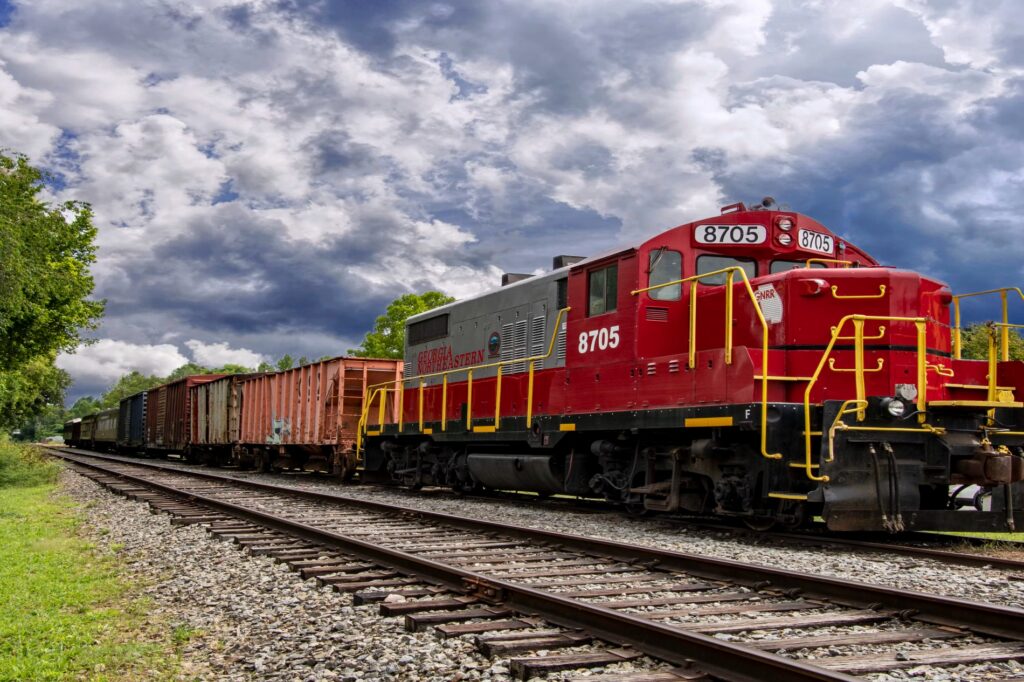
| Rail | Heavy, bulky, and high-volume inland freight | Efficient movement of large loads over long distances | Fixed routes, terminal access, and additional transfer requirements |
| Air | Urgent, high-value, or time-sensitive cargo | Fast long-distance transportation | High freight costs and size or weight restrictions |
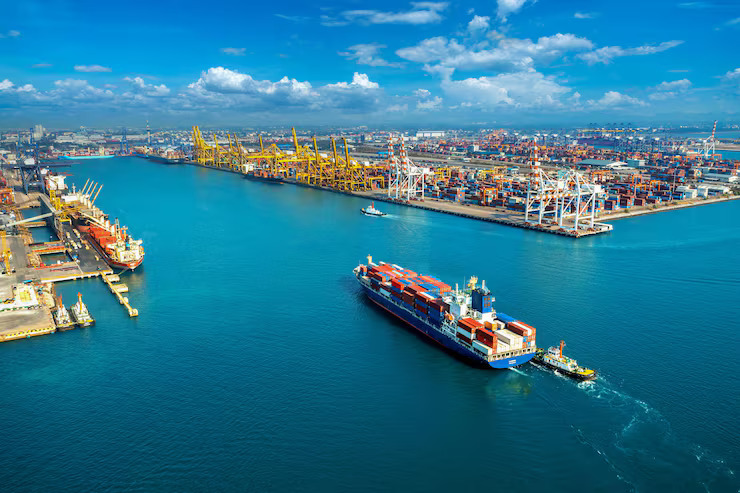
| Ocean | International shipments and large cargo volumes | Economical movement of substantial cargo quantities | Longer transit times and port-related handling |
| Intermodal | Long-distance shipments using two or more transportation modes | Combines the strengths of rail and truck or other modes | Requires coordination between carriers and transfer facilities |
Actual costs and transit times vary by route, fuel prices, shipment dimensions, terminal charges, service schedules, and market conditions. A mode that performs well on one route may be less suitable on another.
Six Factors That Determine the Right Mode
Choosing the right freight shipping options requires more than comparing quoted rates. Shippers should evaluate the complete movement, from the initial pickup to final delivery.
1. Distance and Route Availability
Distance influences transportation cost, transit time, and the suitability of each mode. Trucking is often practical for local and regional deliveries because vehicles can travel directly between many facilities. Rail can be advantageous for long inland routes, particularly when freight moves in large quantities.
Air freight may suit urgent shipments across long distances, while ocean freight is commonly used for international cargo moving between ports.
Before selecting a mode, check:
- The distance between the origin and destination.
- Access to rail terminals, ports, airports, and major roads.
- The availability and frequency of transportation services.
- The need for pickup or delivery beyond a terminal.
- Route restrictions, congestion, and seasonal disruptions.
A rail shipment may require trucks at both ends. Including those additional movements gives a more accurate picture of the route’s suitability.
2. Shipment Volume, Weight, and Dimensions
The size of a shipment affects vehicle selection, loading arrangements, freight pricing, and handling requirements. Large quantities of dense materials can be suitable for rail, while smaller shipments may be easier to move by truck.
Air carriers often apply chargeable-weight calculations based on actual weight and dimensional weight. Truck and rail pricing may also depend on equipment, capacity, distance, and shipment characteristics.
Consider these examples:
- Small, urgent shipment: Air or direct truck transportation may suit the delivery requirement.
- Large quantity of raw materials: Rail may offer an economical option over a suitable route.
- A few pallets for a regional customer: Trucking may provide direct delivery without terminal transfers.
- Oversized industrial equipment: Flatbed or specialized transport may be necessary, subject to weight, dimension, and permit requirements.
Businesses should provide accurate cargo measurements and weights when requesting quotes. Incorrect shipment details can lead to revised rates, equipment problems, or loading delays.
3. Cargo Type and Handling Requirements
Different goods require different equipment and handling procedures. The nature of the cargo can narrow the available transportation modes before price comparisons begin.
For instance, steel beams, construction materials, and certain types of machinery may require flatbed equipment. Palletized consumer goods may fit standard enclosed trailers or containers. Temperature-sensitive products may need refrigerated transportation, while regulated hazardous materials require appropriate equipment, documentation, and trained personnel.
Assess the following before booking:
- Cargo protection: Does the shipment require an enclosed trailer, container, or weather protection?
- Loading method: Can the goods be loaded with a forklift, crane, or other equipment?
- Weight distribution: Can the cargo be safely loaded within equipment and axle limits?
- Special handling: Are temperature control, securement, or hazardous-material procedures required?
- Transfer sensitivity: Could additional loading and unloading increase the risk of damage?
The right mode must accommodate the cargo safely and legally. A lower freight rate does not compensate for unsuitable equipment or avoidable handling risks.
4. Delivery Deadlines and Transit Time
Delivery requirements help determine how much a business should prioritize speed. A shipment needed for an immediate production run has different requirements from a routine replenishment order scheduled weeks in advance.
Air freight generally offers the fastest long-distance movement, but booking availability, security checks, airport handling, and final delivery affect total transit time. Trucking can provide direct service, although traffic, weather, driver-hour regulations, and delivery appointments may cause delays.
Rail can serve scheduled movements of bulk freight, while ocean shipping typically requires longer planning horizons.
When assessing delivery time, account for the entire journey:
- Pickup and loading.
- Travel to the main transportation terminal, if applicable.
- Waiting time and transfer handling.
- Main transit.
- Unloading and final delivery.
A quoted transit time that covers only the main journey may not reflect the actual time required to receive the goods. Build a reasonable buffer for important production materials and customer orders.
5. Infrastructure and Access to Facilities
Transportation options depend on the facilities available along the route. A business near a rail-served industrial site may have direct access to rail freight, while another facility may need truck transportation to reach the nearest terminal.
Rail-to-truck transloading can help businesses move cargo between railcars and trucks when direct rail access is unavailable or the final destination requires road delivery. Transloading facilities may also support the transfer of bulk materials between equipment types.
Check whether your origin and destination have access to:
- Rail sidings or nearby rail terminals.
- Truck loading docks and suitable road access.
- Ports and container handling facilities.
- Warehouses or transloading locations.
- Cranes, forklifts, conveyors, or other required handling equipment.
For example, a manufacturer shipping bulk materials to a site without a rail connection may move the freight by rail to an accessible facility and then use trucks for final delivery. This arrangement depends on suitable transfer facilities, available capacity, and competitive combined costs.
6. Total Transportation Cost
The lowest quoted freight rate does not always produce the lowest overall shipping cost. Businesses should compare the full cost of moving cargo, including the services needed before, during, and after the main journey.
Relevant cost components include:
- Base freight charges.
- Fuel surcharges and other applicable accessorial fees.
- Pickup and final-delivery charges.
- Terminal, port, or transloading fees.
- Loading, unloading, and storage expenses.
- Packaging, cargo protection, and insurance.
- Costs associated with delays, inventory holding, or missed delivery appointments.
For example, rail may offer a lower line-haul rate for a large shipment, but additional trucking and transloading charges could reduce the savings. Trucking may cost more per unit on a long route yet offer direct delivery with fewer transfers.
Compare quotes on the same shipment specifications and service requirements. This makes the financial comparison more meaningful.
Rail vs. Truck Shipping: Which Works Better?
Rail vs truck shipping is a common decision for manufacturers and businesses moving industrial goods, raw materials, and finished products. Neither mode is automatically better for every shipment.
Rail is often worth evaluating for heavy or high-volume cargo traveling over suitable inland routes. Trucking is often preferable for direct delivery, shorter routes, smaller loads, and locations without practical rail access.
| Decision factor | Rail shipping | Truck shipping |
|---|---|---|
| Long-distance bulk freight | Often a strong option | Can be suitable, depending on load and route |
| Short regional deliveries | May require extra terminal movements | Often practical and direct |
| Door-to-door access | Depends on rail access and connecting services | Available at many accessible facilities |
| Heavy industrial materials | Suitable for many commodities and equipment types | Depends on vehicle capacity and legal limits |
| Delivery flexibility | Depends on rail schedules and network access | Offers more direct routing flexibility |
| Transfer requirements | May need trucks or transloading | Often avoids transfers for direct shipments |
For businesses with regular, high-volume freight movements, comparing rail and truck costs over several shipments can reveal useful savings opportunities. For smaller or time-sensitive loads, direct trucking may offer a better fit.
MB Rail helps businesses assess freight movement requirements involving rail and truck services, including the coordination needed to move cargo between transportation networks.
A Practical Process for Selecting Your Freight Mode
Use this step-by-step process to determine how to choose freight transportation for a specific shipment.
- Define the shipment. Record the commodity, weight, dimensions, quantity, packaging, and any special handling needs.
- Confirm the delivery window. Establish the required arrival date and the amount of time available for transportation.
- Check route access. Identify suitable roads, rail terminals, ports, airports, and transfer facilities.
- Shortlist suitable modes. Remove options that cannot meet cargo, equipment, regulatory, or delivery requirements.
- Request comparable quotes. Give each provider the same origin, destination, shipment details, and service expectations.
- Calculate the total cost. Include terminal charges, additional trucking, handling, storage, and other relevant expenses.
- Review reliability and risk. Consider schedule frequency, cargo protection, tracking, service availability, and contingency arrangements.
- Evaluate the result. Choose the mode that best balances cost, transit time, cargo suitability, and operational requirements.
For businesses shipping regularly, review transportation performance over time. Actual delivery records and invoices can help identify recurring delays, unexpected charges, and routes that may benefit from a different shipping arrangement.
When Intermodal Transportation Makes Sense
Rail can be an economical option for heavy or high-volume shipments over suitable distances, while direct trucking may work better for shorter routes or time-sensitive deliveries. Businesses comparing these options should also evaluate transloading logistics versus direct shipping to understand how transfer fees, route access, handling requirements, and final-delivery costs affect the overall shipping budget.
A typical movement may follow this sequence:
- A truck collects freight from the shipper.
- The cargo moves to a rail terminal or transloading facility.
- Rail carries the freight over the main route.
- A truck completes delivery to the receiving facility.
This approach may be appropriate for heavy materials, recurring freight volumes, and routes with suitable rail infrastructure. Its performance depends on transfer costs, terminal schedules, equipment availability, and coordination between service providers.
Intermodal transportation is not automatically cheaper than direct trucking. Businesses should compare the total cost and expected transit time for the complete journey before making a decision.
Frequently Asked Questions
What are the main types of freight transportation?
The main types of freight transportation are truck, rail, air, ocean, and intermodal shipping. Trucking offers direct road access, rail suits many heavy and high-volume inland movements, air supports urgent shipments, and ocean freight serves international cargo. Intermodal shipping combines modes to meet route and delivery requirements.
Which freight transportation mode is the most cost-effective?
The most cost-effective mode depends on shipment size, distance, cargo type, delivery deadlines, and route access. Rail may be economical for large freight volumes over suitable distances, while trucking may cost less overall for short routes or direct deliveries. Air freight is generally more expensive, and ocean freight can be economical for large international shipments.
Is rail shipping cheaper than truck shipping?
Rail shipping can cost less per unit for heavy or high-volume freight moving over suitable long-distance routes. However, terminal handling, transloading, pickup, and final-delivery charges can affect the total. Trucking may be more economical for shorter routes, smaller loads, or shipments requiring direct delivery.
How do I choose the best transportation mode for cargo?
Start by identifying the cargo’s weight, dimensions, handling requirements, origin, destination, and delivery deadline. Check infrastructure access, compare suitable transportation options, and calculate the complete shipping cost. Select the mode that meets safety and delivery requirements at an acceptable total cost.
What is the difference between intermodal and multimodal transportation?
Intermodal transportation moves freight using two or more modes, commonly rail and truck, with the cargo remaining in the same loading unit during transfers. Multimodal transportation also combines modes, but the term commonly refers to a movement arranged under a single transport contract. The precise contractual and operational arrangements depend on the service provider and applicable agreements.
What information should I provide when requesting a freight quote?
Provide the pickup and delivery locations, commodity description, total weight, dimensions, shipment quantity, packaging, loading requirements, delivery deadline, and any special handling or regulatory needs. Mention available loading equipment and rail access when relevant. Complete details help providers assess suitable equipment, routing, and charges.
Choose a Freight Transportation Plan That Fits Your Business
The right shipping decision begins with a clear understanding of your cargo, route, delivery deadline, and complete transportation costs. Businesses that compare freight transportation modes using consistent shipment details can make more informed decisions about direct trucking, rail freight, and combined rail-to-truck movements.
For manufacturers and shippers moving bulk materials, industrial goods, or recurring freight loads, reviewing rail access and transloading arrangements can identify practical alternatives to direct truck transportation. MB Rail can help businesses assess their freight movement requirements and identify suitable service arrangements. Share your shipment details and request a quote to compare available transportation options and plan your next freight movement with greater clarity.
The most suitable choice is the one that delivers your cargo safely, meets your required schedule, and supports your business’s transportation budget.