
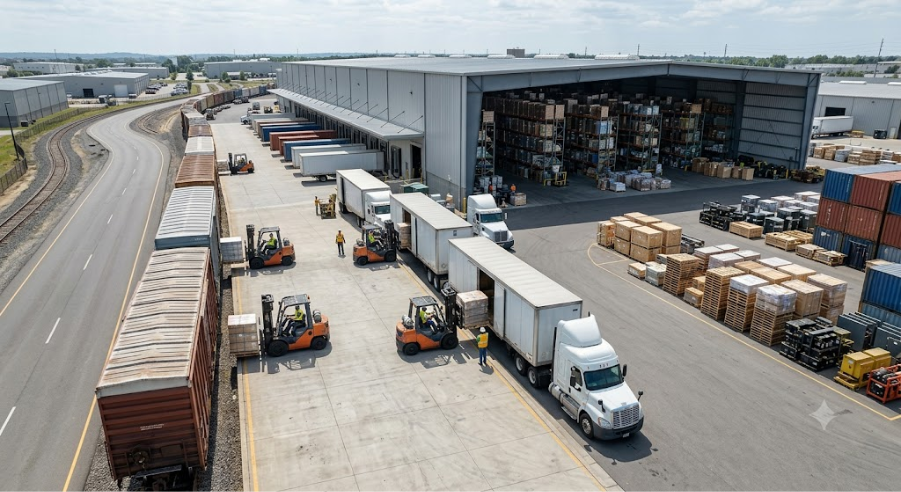
Modern supply chains require more than simple transportation from one location to another. Businesses that move bulk commodities, construction materials, industrial products, or agricultural goods often need flexible storage while also shifting freight between transportation modes. This is where transload warehouse solutions create significant value by combining secure warehousing with efficient rail-to-truck transfer in a single location. Companies such as MB Rail help businesses simplify logistics by offering integrated facilities that reduce handling, improve inventory control, and support faster deliveries.
Rather than relying on separate storage facilities and transfer points, businesses can streamline operations by using a single site designed for both functions. This approach reduces transportation costs, minimizes delays, and gives shippers greater flexibility when responding to changing customer demands.
What Is a Transload Warehouse?
A transload warehouse is a facility where freight arriving by rail can be unloaded, stored temporarily, and then reloaded onto trucks for final delivery. The process can also work in reverse, allowing freight arriving by truck to be transferred onto railcars for longer-distance transportation.
Unlike a traditional warehouse that focuses only on storage, a rail transload warehouse combines inventory management with transportation services. This creates an efficient hub where products can move smoothly between different transportation modes while remaining protected in secure storage.
This combination is especially valuable for businesses that receive large rail shipments but deliver smaller quantities to multiple customer locations by truck.
Why Businesses Need Combined Storage and Transloading
Many industries face challenges when rail schedules do not align perfectly with customer delivery timelines. Products may arrive in large quantities, while customers require smaller shipments to spread over several days or weeks.
Instead of moving every rail shipment immediately to its destination, businesses can store products until they are ready for delivery. This provides better inventory control while avoiding unnecessary transportation expenses.
Combining warehousing and transloading also helps companies:
- Reduce the need for multiple handling locations.
- Improve delivery scheduling flexibility.
- Lower transportation costs through better shipment planning.
- Protect products during temporary storage.
- Simplify inventory management across the supply chain.
These advantages become even more important when dealing with high-volume freight or seasonal demand fluctuations.
How the Process Works
A combined warehousing and transloading operation follow a straightforward process designed for efficiency.
Rail Arrival
Products arrive at the facility in railcars carrying bulk or palletized freight. Experienced personnel unload the cargo using specialized equipment designed for the specific type of product.
Warehouse Storage
Once unloaded, goods are placed into secure storage until transportation is required. Depending on the shipment, products may remain in bulk form or be palletized for easier handling.
Warehousing provides flexibility when customer demand changes or delivery schedules shift unexpectedly.
Inventory Management
Modern facilities track incoming and outgoing inventory using warehouse management systems. This gives customers greater visibility into available stock and improves planning for future shipments.
Truck Loading
When customers require delivery, warehouse staff prepare the products for shipment and load them onto trucks. Because the inventory is already positioned close to transportation infrastructure, shipments can often leave quickly.
The result is a seamless movement from rail to storage to truck without unnecessary transportation between different facilities.
The Rail Access Advantage
Rail access is one of the most valuable features of an integrated transload warehouse.
Rail transportation offers excellent efficiency for moving heavy and bulk commodities over long distances. However, rail lines rarely extend directly to every customer’s location. Trucks provide the flexibility needed for final delivery but become expensive for long-distance transportation.
A rail-served warehouse bridges this gap by combining the strengths of both transportation methods.
The benefits include:
- Lower transportation costs for long-distance freight movement.
- Greater shipping capacity compared to truck-only transportation.
- Reduced highway congestion for large shipments.
- Improved delivery flexibility through regional truck distribution.
- Better support for large industrial and commercial projects.
Businesses can move products economically by rail and then complete final deliveries using trucks only where necessary.
Industries That Benefit Most
Many industries rely on combined warehousing and transloading because their products require both storage and flexible transportation.
Construction Materials
Construction projects often require deliveries over several months rather than all at once. Materials such as steel, cement, lumber, aggregates, and pipe can arrive by rail, remain safely stored, and then be delivered according to project schedules.
Agriculture
Agricultural products frequently move in large seasonal volumes. Warehousing allows producers and distributors to store grain, feed, fertilizer, or related materials before regional distribution by truck.
Manufacturing
Manufacturers often receive raw materials in bulk rail shipments while shipping finished products in smaller truckloads. Integrated facilities simplify both inbound and outbound logistics.
Energy and Industrial Products
Industrial chemicals, minerals, plastics, and energy-related materials commonly benefit from combined storage and rail transfer, particularly when inventory needs fluctuate throughout the year.
Retail Distribution
Large retail inventories can be received in bulk before being divided into smaller shipments for regional stores or distribution centers.
Cost Savings Through Integrated Operations
One of the strongest reasons businesses choose freight warehousing solutions combined with transloading is the opportunity to reduce operating costs.
Separate storage facilities require additional transportation between warehouses and transfer terminals. Every extra movement increases labor costs, fuel consumption, equipment uses, and the risk of product damage.
Integrated facilities eliminate many of these unnecessary steps.
Cost savings typically come from several areas:
- Fewer transportation movements between facilities.
- Reduced product handling.
- Lower labor requirements.
- Better utilization of truck capacity.
- Improved inventory planning.
- Reduced storage delays.
- More efficient scheduling of outbound deliveries.
Over time, these efficiencies contribute to lower total logistics costs while improving overall service quality.
Improving Supply Chain Flexibility
Market conditions rarely remain constant. Customer demand changes, production schedules shift, and transportation disruptions can occur without warning.
Having access to transloading and storage services provides businesses with greater flexibility during these situations.
Instead of rushing shipments directly from rail to customers, businesses can hold inventory until it is needed. This helps avoid stock shortages while reducing pressure on transportation schedules.
Integrated facilities also support:
- Seasonal inventory buildup.
- Emergency inventory storage.
- Customer-specific shipment schedules.
- Inventory buffering during transportation disruptions.
- Faster response to unexpected customer orders.
This flexibility strengthens supply chain resilience while helping businesses maintain reliable customer service.
Reducing Product Damage
Every time products are moved, the possibility of damage increases.
Traditional logistics often involve multiple loading and unloading points before freight reaches its destination. Each transfer creates another opportunity for accidents, contamination, or packaging damage.
A combined rail transload warehouse minimizes unnecessary handling by allowing products to move directly into storage after rail unloading and then directly onto outbound trucks.
Fewer handling stages often result in:
- Lower damage rates.
- Improved product quality.
- Reduced insurance claims.
- Better customer satisfaction.
- Lower replacement costs.
This is especially important for fragile, high-value, or moisture-sensitive products.
Better Inventory Visibility
Modern warehouse operations rely on digital inventory management systems that provide real-time tracking throughout the storage process.
Businesses can monitor inventory levels, shipment arrivals, outbound deliveries, and available warehouse space from a centralized system.
Improved visibility helps organizations:
- Forecast future inventory needs.
- Prevent stock shortages.
- Reduce excess inventory.
- Improve production planning.
- Support faster customer communication.
Accurate inventory information allows managers to make informed decisions that improve operational efficiency.
Choosing the Right Warehouse Partner
Selecting the right logistics partner requires evaluating more than warehouse size alone.
Businesses should look for facilities that offer comprehensive services, experienced staff, and strong transportation connections.
Important considerations include:
- Direct rail access for efficient freight transfer.
- Secure indoor and outdoor storage options.
- Modern inventory tracking systems.
- Flexible handling capabilities for different cargo types.
- Experienced equipment operators.
- Reliable truck transportation coordination.
- Strong safety practices.
- Capacity for future business growth.
Working with an experienced provider like MB Rail helps businesses create more efficient transportation networks while supporting long-term operational goals.
Supporting Sustainable Logistics
Sustainability continues to influence transportation decisions across many industries.
Rail transportation generally consumes less fuel per ton of freight over long distances compared with moving the same cargo entirely by truck. By combining rail transportation with regional truck deliveries, businesses can reduce overall fuel consumption and improve transportation efficiency.
Integrated warehousing further supports sustainability by minimizing unnecessary freight movements and reducing repeated loading operations.
While every supply chain is different, combining rail transportation with warehousing often supports both environmental objectives and long-term cost savings.
Future Trends in Integrated Warehousing
Supply chains continue to become more data-driven, responsive, and customer-focused.
Future transload facilities are expected to incorporate greater automation, advanced inventory technology, improved shipment visibility, and enhanced scheduling systems.
Businesses increasingly seek logistics providers capable of offering complete transportation solutions rather than isolated services.
As customer expectations continue to evolve, integrated warehousing and transloading will likely become an even more important part of efficient freight management.
Companies that invest in flexible logistics strategies today will be better prepared to adapt to changing market conditions tomorrow.
FAQs
1. What is a transload warehouse?
A transload warehouse is a facility where freight is transferred between railcars and trucks while also providing temporary storage. It allows businesses to store products securely before shipping them to their final destination, improving logistics efficiency and inventory management.
2. Which industries benefit most from transload warehouse solutions?
Industries such as construction, agriculture, manufacturing, energy, chemicals, and retail benefit from transload warehouse solutions. These businesses often handle bulk shipments that require flexible storage and regional truck distribution.
3. How do transload warehouse solutions reduce transportation costs?
By combining storage and freight transfer at one location, businesses eliminate unnecessary transportation between separate warehouses and terminals. This reduces handling, labor, fuel expenses, and delivery delays while improving truck utilization.
4. Why is rail-to-truck transloading important for supply chains?
Rail-to-truck transloading combines the cost efficiency of long-distance rail transportation with the flexibility of truck delivery for the final mile. This helps businesses improve delivery scheduling, reduce freight costs, and respond more quickly to customer demand.
5. What should businesses look for when choosing a transload warehouse provider?
Businesses should evaluate factors such as direct rail access, secure indoor and outdoor storage, modern inventory tracking systems, experienced handling staff, flexible cargo capabilities, truck coordination, safety standards, and the provider’s ability to support future growth.
Final Verdict
Businesses moving bulk freight need logistics solutions that combine efficiency, flexibility, and cost control. Integrating warehousing with rail-to-truck transfer allows companies to reduce handling, improve inventory management, and optimize transportation costs without sacrificing service quality. Whether supporting construction materials, manufacturing, agriculture, or industrial products, integrated facilities deliver practical advantages throughout the supply chain.
Choosing the right partner for storage and transportation can improve operational performance while creating greater flexibility for future growth. If your business is looking to simplify freight movement through combined warehousing and rail access, Contact us today to learn how integrated solutions can support your logistics goals.

